Entradas populares

lunes, 6 de febrero de 2017

What is peacekeeping?

United Nations Peacekeeping helps countries torn by 
conflict create conditions for lasting peace.

Peacekeeping has proven to be one of the most effective tools available to the UN to assist host countries navigate the difficult path from conflict to peace. 
Peacekeeping has unique strengths, including legitimacy, burden sharing, and an ability to deploy and sustain troops and police from around the globe, integrating them with civilian peacekeepers to advance multidimensional mandates.
UN Peacekeepers provide security and the political and peacebuilding support to help countries make the difficult, early transition from conflict to peace.
UN Peacekeeping is guided by three basic principles:
  • Consent of the parties;
  • Impartiality;
  • Non-use of force except in self-defence and defence of the mandate.
Peacekeeping is flexible and over the past two decades has been deployed in many configurations. There are currently 16 UN peacekeeping operations deployed on four continents.
Today's multidimensional peacekeeping operations are called upon not only to maintain peace and security, but also to facilitate the political process, protect civilians, assist in the  disarmament, demobilization and reintegration of former combatants; support the organization of elections, protect and promote human rights and assist in restoring the rule of law.
Success is never guaranteed, because UN Peacekeeping almost by definition goes to the most physically and politically difficult environments. However, we have built up a demonstrable record of success over our 60 years of existence, including winning the Nobel Peace Prize.
Peacekeeping has always been highly dynamic and has evolved in the face of new challenges. Recently, Secretary-General Ban Ki-moon established a 17-member High-level Independent Panel on UN Peace Operations to make a comprehensive assessment of the state of UN peace operations today, and the emerging needs of the future. (Copyrights: Taken from DPKO/UN )

Please watch the following video performed by George Clooney about Peacekeeping task.


jueves, 10 de noviembre de 2016

How is driving in Port-au-Prince?

How is driving in Port-au-Prince

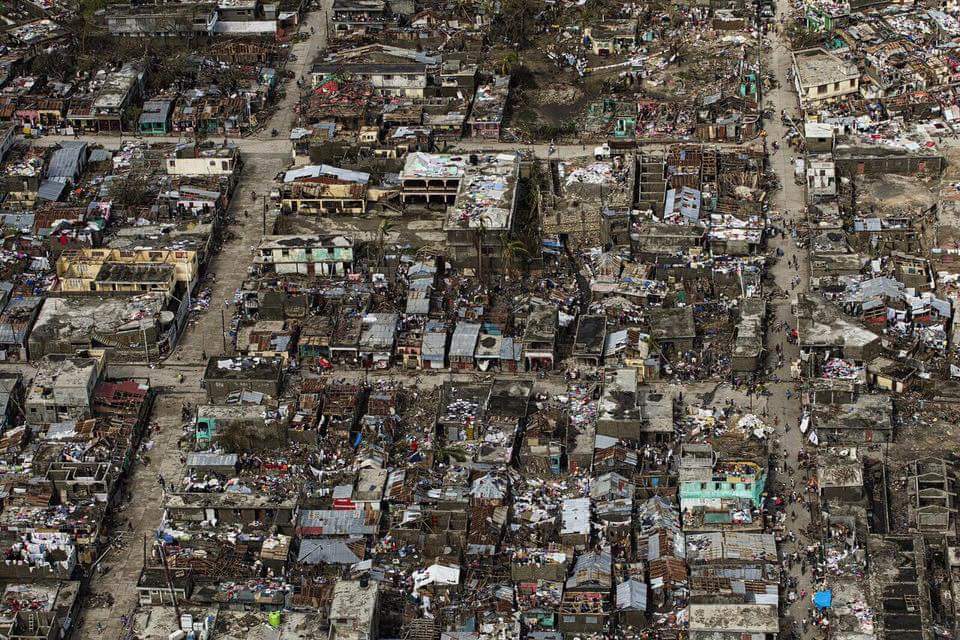
Despite the fact that only 15% of the roads in Port-au-Prince the capital and most important city of Haiti are pavement, 12.5 % of the public transportation´s drivers (Tap Taps) have been trained for driving around the city before going outside for picking up passengers and their behavior behind the steering wheel is deplorable; going outside through the routes could be sometimes a very dangerous task, however, just driving carefully and try to avoid those Tap Tap reckless drivers you will be safe inside your car. 

Below you will find a video recorded while driving in the city or you could save and paste the follow URL and search on youtube.com: https://youtu.be/Rb1r_TympXQ


lunes, 7 de noviembre de 2016

Daily living in Haiti

Daily living in Haiti.

Since some peers have asked how is daily living in Haiti. I would like to show you some  daily and common activities that you could find outside on the streets while driving around in Port-au-Prince.


These pictures display the public transportation that Haitian people take every day when they want to go to one place to another one far away, they are called: TAP TAP, is very tight, hot and uncomfortable way to travel.


Those TAP Taps are pick-up trucks colored in bright colors with a wide range of pictures and images like the favorite local singers or soccer players. For UN staff is not allowed to travel in these cars because their drivers are not qualified people, they are breaking all traffic laws, driving over high speed  and all of them have a very bad behavior while carrying out passengers.

domingo, 6 de noviembre de 2016

Interesting video about Peacekeepers work around the world


Interesting video about Peacekeepers work around the world

"Americans Show Support for UN Peacekeepers"

Hello teacher and classmates.

Today I will share with you a short but delightful video taped and published in October 9th, 2012 by PIO which stands for Public Information Office in Haiti, about a campaign rolled up in USA when more than 25.000 Americans thanked to UN Peacekeepers through letters delivered from all states in US.

You will be able to watch the video through the follow URL:

https://www.youtube.com/watch?v=YOnsMwY2nnI

Also you can watch the video from the follow file attached her below:


Americans Show Support for UN Peacekeepers

Thank you for your nice comments that you have written so far. God bless you. 

Truly,

John Jaramillo


miércoles, 26 de octubre de 2016

UNITED NATIONS STAFF DAY

UNITED NATIONS STAFF DAY
by John Jaramillo

Today I would like to share with you that I am delighted to bring back and refurbish a nice tradition that began in 1953 with the occasion of “United Nations Staff Day” celebrated yesterday on 25th October and also to revel the UN wonderful diversity.

            As a matter of fact, it has been difficult for me to be stayed late, took work home and traveled so far until this Caribbean country, however there could be no more meaningful service than advancing the timeless principles of the United Nations Charter and reach the goals set up by the awesome Organization that I am currently working for.

Whoever we are, whatever the stage of our career path and wherever we may serve with proud and respect, all the UNPOL (UN Police Officers) should be together in this noble mission serving for peace goal throughout the world.

Finally I would like to thanks your comments within this blog reminding the United Nations Official Languages, which are as follows:

Shukran jazeelan!
谢 谢 !
Thank you!
Merci beaucoup!
Spasibo!

¡Muchas gracias!